 University of North Texas

Counseling Master's: School Counseling Track (M.S.)
Thank you for your interest in the University of North Texas Counseling Program. Our CACREP-accredited programs have consistently ranked #1 in Texas and has frequently ranked among the top 20 Counseling programs nationwide. Because of this strong reputation, admission to the program is highly competitive.
The School Counseling program is accredited by the Council for Accreditation of Counseling and Related Educational Programs (CACREP). This accreditation means we meet or exceed strict academic standards for excellence.
The 60 credit-hour Master of Science degree in School Counseling requires a passing score for the master's comprehensive exam (written, oral or both) administered during student enrollment in Internship.
Cohort Model
The School Counseling program follows a cohort model, designed to provide structure, support, and a strong sense of community among students progressing through the program together.
Students enroll in two courses each semester—summer, fall, and spring—for the duration
of the program.
All courses in the cohort sequence are selected and assigned by the Program Coordinator

Certifications/Licensure Opportunities
School Counselor Certification
The completion of this track meets the educational requirements for certification as a school counselor in the state of Texas. To become certified, the State of Texas also requires a passing score on the TExES Counselor Exam.
Licensed Professional Counselor (LPC)
With the completion of one additional course, this track meets the educational requirements for licensure as a licensed professional counselor (LPC) in the state of Texas.
The completion of this track meets the educational requirements for certification as a school counselor in the state of Texas. To become certified, the State of Texas also requires a passing score on the TExES Counselor Exam.
Licensed Professional Counselor (LPC)
With the completion of one additional course, this track meets the educational requirements for licensure as a licensed professional counselor (LPC) in the state of Texas.
Vision
The UNT Counseling Program aspires to create a student-centered program that models
healthy relationships and pursues a collective purpose based on the values of diversity,
transparency, integrity, and community engagement. Through maintaining and building on current program strengths, our program will cultivate leaders who positively impact clients, students, and the counseling profession; and thereby, all humanity.
Mission
The Counseling Program promotes human development through education, research, and service that advance the profession of, and scholarship in, counseling.
- Through education, the Program prepares highly competent counseling professionals – including counseling associates, entry and advanced level counselors, counselor educators, counselor supervisors, counseling researchers, and counseling administrators – for work in schools, communities, colleges, business, and industry.
- Through research, the Program creates, applies, and disseminates innovative knowledge, especially in the area of counseling for holistic wellness with at-risk and diverse populations.
- Through service, the Program provides humanitarian assistance to academic, professional, and public communities, including volunteer counseling services to the public.
Frequently Asked Questions (FAQ)
Is there a minimum GPA requirement to apply?
Yes, applicants must have a minimum GPA of 3.0 on a 4.0 scale. The graduate admissions
office calculates the GPA from all official transcripts.
Are GRE scores required to apply?
No, GRE scores are not required to apply.
Is this an online program?
No. The Counseling Program is an in-person program based at the Denton campus.
When are classes typically offered?
Classes are typically offered afternoons and evenings, Monday-Thursday, meeting
once a week.
What is a typical class size?
Non-clinical classes can be as large as 25 students and clinical classes range
in size from 10 to 15 students.
Does the Counseling Program offer Graduate Assistantships for Master's Students?
No. The counseling program does not offer graduate assistantships for master's
students.
Where do school counseling students complete practicum and internships?
School Counseling students complete practicum and internships at approved school
sites.
Does this program prepare me to become a Certified School Counselor?
Yes, our program fulfills the educational requirements to become a certified school
counselor in the state of Texas.
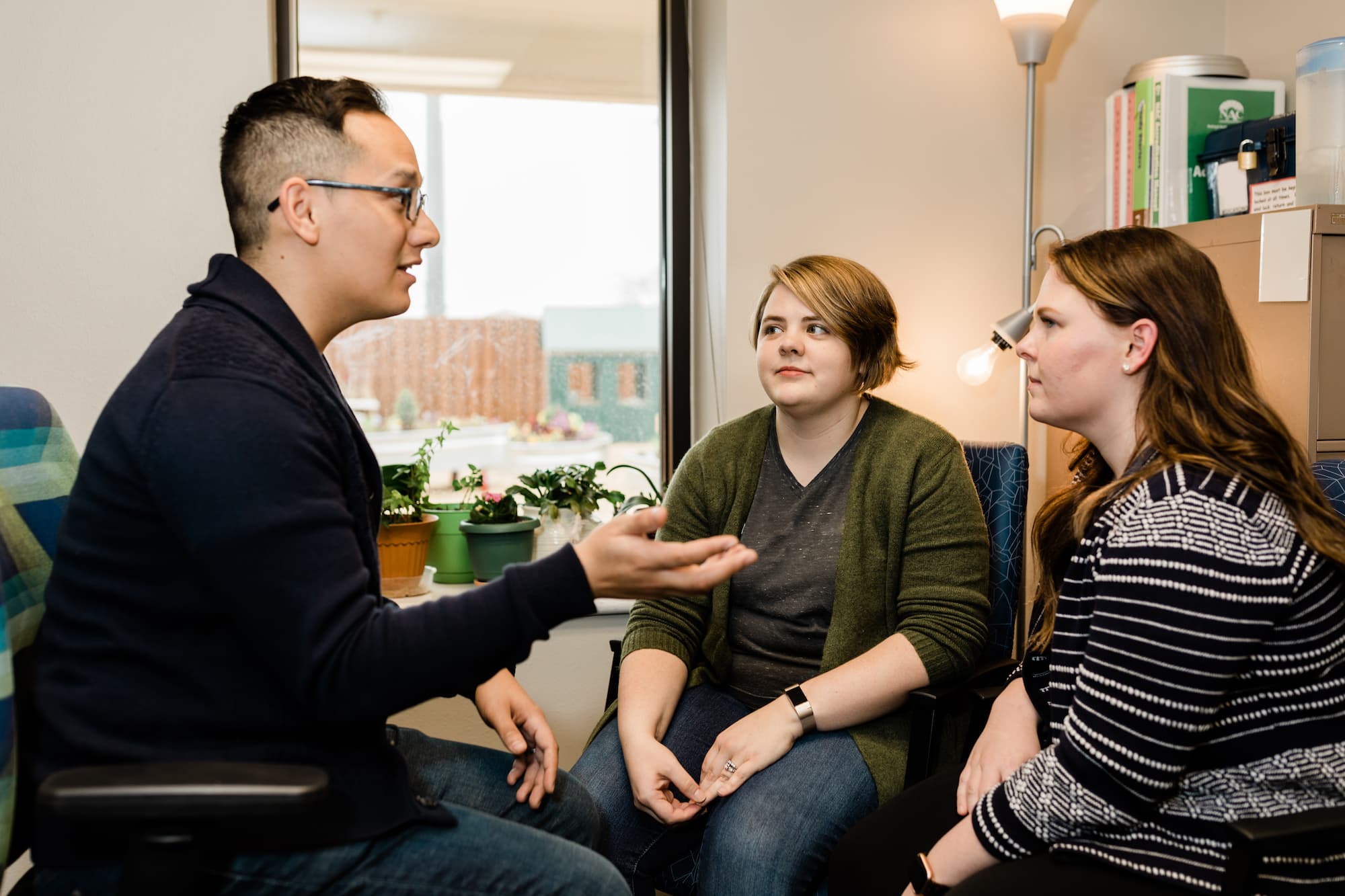
Our program fosters personal growth while helping students to develop a strong identity as a professional counselor.
Many of our faculty members are renowned experts in the field. They’ve earned recognition from the American Counseling Association (ACA), Association for Counselor Education and Supervision (ACES), Texas Counseling Association (TCA), The Association for Play Therapy (APT), and Chis Sigma Iota (CSI) international honor society for students, professional counselors and counselor educators.